Skip to content

03 Scheduled Waste Collection

Scheduled Waste Collection in Malaysia

Aerial view of Ranama's industrial operating facility in Malaysia
Operating environment Malaysia

Scheduled Waste collection starts with understanding the actual waste requirement.

Tell us what waste has been generated, the applicable SW code where known, the approximate quantity, collection location and current packaging or container information.

Ranama can then check the requirement against its current defined licensed scope before applicable collection and transport arrangements are discussed.

01Malaysia-based capability

02Current DOE / eSWIS-listed scope

03Relevant competent-person proof

01 Before Collection

Start with what has actually been generated.

Scheduled Waste requirements should not begin with the assumption that every waste stream can be collected under the same licence or pathway.

The actual waste information needs to be understood first so the requirement can be checked against the relevant current scope.

Requirement manifestInput / 09 fieldsProvide what is currently known
  1. 01Waste description
  2. 02Applicable SW code where known
  3. 03How the waste was generated
  4. 04Approximate quantity
  5. 05Collection location
  6. 06Current container or packaging information
  7. 07Number of containers where relevant
  8. 08Current storage or handling context where relevant
  9. 09Other information that may affect the requirement
Classification note

If you already know the SW code, include it in your enquiry.

If the classification has not yet been confirmed, do not choose a code simply by approximation.

02 Regulatory Context

Scheduled Waste is a defined regulatory category.

77Scheduled Waste categories
under the First Schedule

In Malaysia, Scheduled Waste is managed under the Environmental Quality (Scheduled Wastes) Regulations 2005.

The Department of Environment identifies 77 Scheduled Waste categories under the First Schedule.

That means “Scheduled Waste” should not be used as a general label for every industrial waste stream.

The Department of Environment also states that the waste generator is responsible for classifying the Scheduled Waste it generates because the generator has the detailed information about how the waste arose and the processes involved.

Responsibility remains with the generator

A collection enquiry does not transfer the waste generator’s classification responsibility to Ranama.

Framework sources Department of Environment Malaysia / Environmental Quality (Scheduled Wastes) Regulations 2005 / current eSWIS information

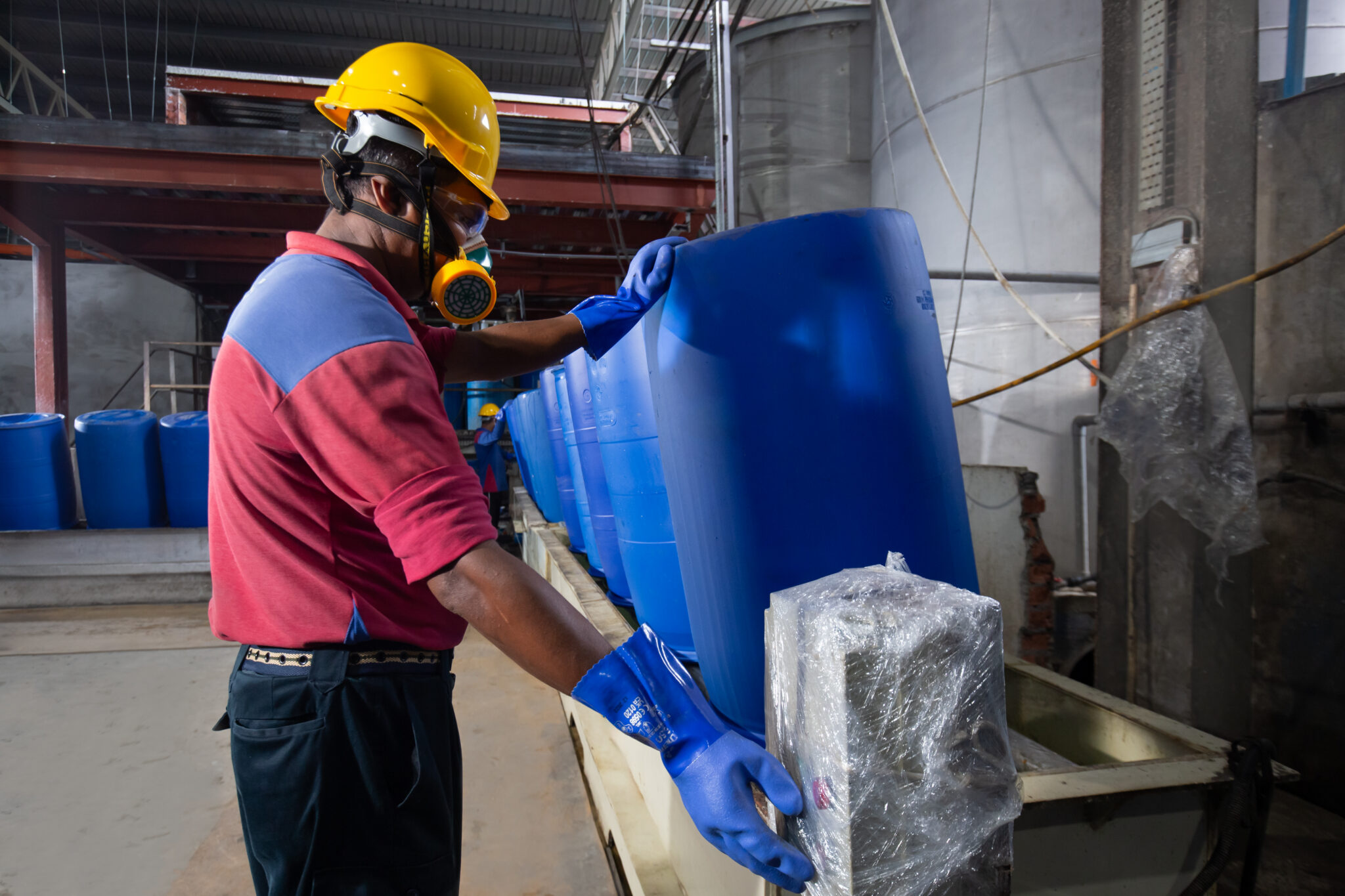
Ranama operator wearing protective equipment handling a blue industrial container

03 Defined Capability

Collection begins by checking the requirement against the current scope.

Ranama’s Scheduled Waste capability operates within defined DOE / eSWIS records.

Before collection arrangements are treated as applicable, the waste classification and service requirement need to be checked against the relevant current scope.

Where the requirement falls within scope, the discussion can then move into the practical information needed for collection and transport.

Ranama’s Scheduled Waste capability is defined, not universal.

04 How to Start

Move from waste information to an appropriate collection discussion.

  1. 01

    Identify the Waste

    Establish what waste has been generated and the process that produced it.

  2. 02

    Confirm the Classification Where Available

    Provide the applicable SW code where it has already been determined by the waste generator.

  3. 03

    Check the Requirement Against Ranama’s Scope

    The stated SW code and service requirement need to be considered against Ranama’s current applicable licensed capability.

  4. 04

    Provide the Collection Information

    Share the approximate quantity, location, current packaging or container information and other operational details relevant to the requirement.

  5. 05

    Discuss the Applicable Next Step

    Where the requirement falls within scope, the relevant collection and transport arrangements can be discussed in context.

Current eSWIS licence entry003885Defined off-site recovery record

05 Waste Codes

The applicable SW code matters.

Ranama’s current DOE / eSWIS off-site recovery record covers a defined group of Scheduled Waste codes rather than every Scheduled Waste category.

The current 003885 listing includes:

  • SW305
  • SW306
  • SW307
  • SW310
  • SW311
  • SW322
  • SW323
  • SW324
  • SW409
  • SW410
  • SW416
  • SW417
  • SW418

Provide the applicable SW code in your enquiry where known so the requirement can be checked against the current scope.

A code appearing in the current scope does not remove the need to consider the actual waste and requirement.
Check Your Requirement With Ranama

06 Regulatory Evidence

Separate records support separate parts of the capability.

Off-Site Recovery

Current eSWIS licence entry 003885

Kemudahan: Pemerolehan Kembali Luar Tapak

Off-site recovery

The current eSWIS record lists Ranama Resource Sdn Bhd under this licence type together with the defined Scheduled Waste code scope shown above.

Scheduled Waste Transport

Current eSWIS licence entry 003886

Pengangkut: Pembawa Yang Ditetapkan

Designated Scheduled Waste transporter

The current eSWIS record lists Ranama Resource Sdn Bhd under this transporter classification together with the associated vehicle registrations maintained in the current system.

View Certifications & Licences
CePSWaM competent-person certificate issued by the Malaysian Environment Institute
Evidence view Competent-person proof

07 Relevant Proof

Evidence that matches the claim.

Relevant competent-person proofCePSWaM

Certified Environmental Professional in Scheduled Waste Management

Certificate reference: CePSWaM/04017
Environmental-management contextISO 14001:2015

AFNOR Certification

Certificate reference: 2011/40619.4

These records provide different forms of supporting evidence.

The Scheduled Waste capability itself should be supported first by the relevant DOE / eSWIS records and competent-person evidence.

ISO 14001:2015 provides environmental-management context.

ISO 14001 certification is not a substitute for the relevant Scheduled Waste licence record.
View Certifications & Licences

08 Collection Enquiry Information

Give us enough information to understand the requirement.

You do not need to have every technical answer before making an enquiry.

Start with the information already available.

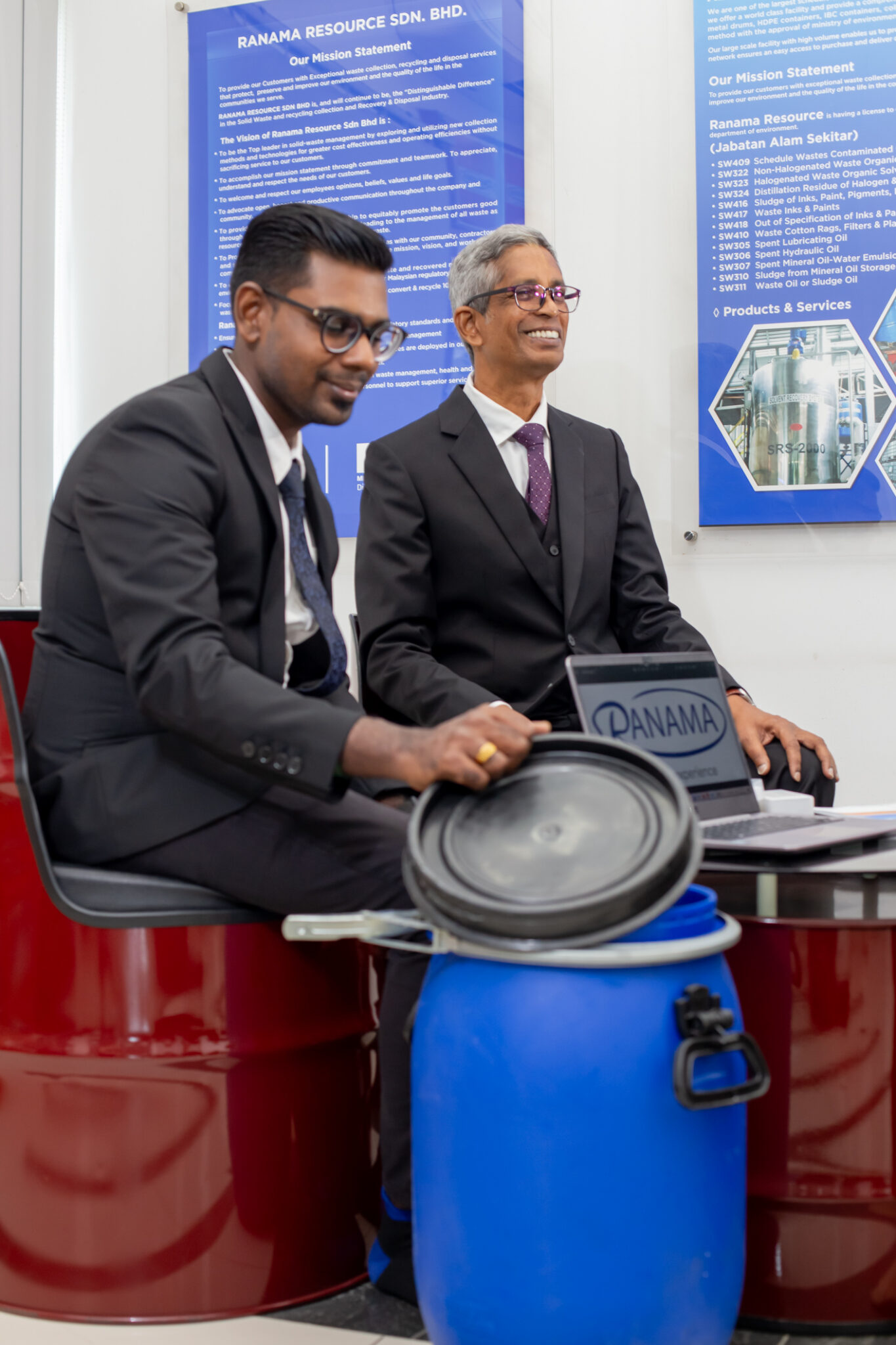
Ranama representatives seated beside industrial drums and a blue container
Requirement review Information in context
Collection handoverStart with what is available
  • 01SW code where confirmed
  • 02Waste description
  • 03Process that generated the waste where relevant
  • 04Approximate quantity
  • 05Collection location
  • 06Current container or packaging type
  • 07Number of containers where relevant
  • 08Current storage or handling context where relevant
  • 09Preferred collection requirement
  • 10Other information that may affect the enquiry
Discuss Your Scheduled Waste Requirement

09 Classification Responsibility

Do not assign an SW code simply to complete an enquiry.

If the Scheduled Waste classification has not yet been established, avoid selecting a code based only on an approximate description.

The waste generator remains responsible for classification.

Where classification is uncertain, the current Department of Environment guidance should be consulted.

You can still describe the waste, the process that generated it, quantity, location and other information available to you.

An unverified SW code should simply not be presented as confirmed.

Accurate uncertainty

If the code is not yet confirmed, say so.

Accurate uncertainty is better than an incorrect classification.

10 Practical Guidance

Need a more detailed preparation checklist?

Our Scheduled Waste article explains the information organisations can prepare before discussing collection, including classification, quantity, packaging, storage, labelling and operational information.

Read: Scheduled Waste in Malaysia - What to Prepare Before Arranging Collection

11 A Specialist Industrial Service

Scheduled Waste is part of Ranama’s capability, not its entire identity.

Ranama’s primary business remains Industrial Container Reconditioning & Recycling.

Scheduled Waste Collection is a specialist supporting capability with its own defined regulatory and operational scope.

Where a requirement also involves industrial containers, the relevant container-lifecycle discussion can be considered separately and connected where appropriate.

Explore Industrial Container Reconditioning & Recycling

12 Common Questions

Scheduled Waste Collection FAQs

01What is Scheduled Waste in Malaysia?

Scheduled Waste is a defined category under Malaysia’s Environmental Quality (Scheduled Wastes) Regulations 2005.

The Department of Environment identifies 77 Scheduled Waste categories under the First Schedule.

02Who is responsible for classifying Scheduled Waste?

The waste generator is responsible for classifying the Scheduled Waste it generates.

The Department of Environment explains that the generator has the detailed knowledge of how the waste was produced and the processes involved.

03Can Ranama collect every Scheduled Waste code?

No.

Ranama operates within a defined current scope.

Provide the applicable SW code where known so the requirement can be checked before collection arrangements are discussed.

04Which SW codes are currently listed under Ranama’s off-site recovery record?

The current 003885 eSWIS record lists:

SW305, SW306, SW307, SW310, SW311, SW322, SW323, SW324, SW409, SW410, SW416, SW417 and SW418.

The current record should be rechecked whenever regulatory scope information is updated.

05Does Ranama have a Scheduled Waste transport record?

Yes.

Current DOE / eSWIS information lists Ranama under licence entry 003886 as:

Pengangkut: Pembawa Yang Ditetapkan

English context:

Designated Scheduled Waste transporter.

06What information should I provide before collection?

Where available, provide the SW code, waste description, how the waste was generated, approximate quantity, collection location, current packaging or container information and other relevant operational context.

07What if I do not know the SW code?

Do not select a code simply by approximation.

The waste generator remains responsible for classification.

You can still describe the waste and how it was generated while the correct classification is being established.

08Where can I review Ranama’s Scheduled Waste evidence?

Use the Certifications & Licences page for Ranama’s organised licence, certification and competent-person evidence.

View Certifications & Licences

13 Your Scheduled Waste Requirement

Start with the waste information you have.

Tell us the SW code where known, the waste involved, approximate quantity, collection location and other information relevant to the requirement.

The first step is to determine whether the requirement falls within the current applicable scope.

Reliability That Moves Industry Forward.