
Plastic / HDPE and Steel / Metal are separate drum families
Ranama’s current reconditioned drum range is organised into three broad groups:
- Plastic / HDPE Drums
- Steel / Metal Drums
- Poly-Composite Drum
This article focuses on the first two.
Plastic / HDPE and Steel / Metal drums have dedicated product ranges because the available configurations and specifications differ.
The purpose of comparing them is therefore not to declare a universal winner.
It is to understand which product family contains the specification relevant to your requirement.
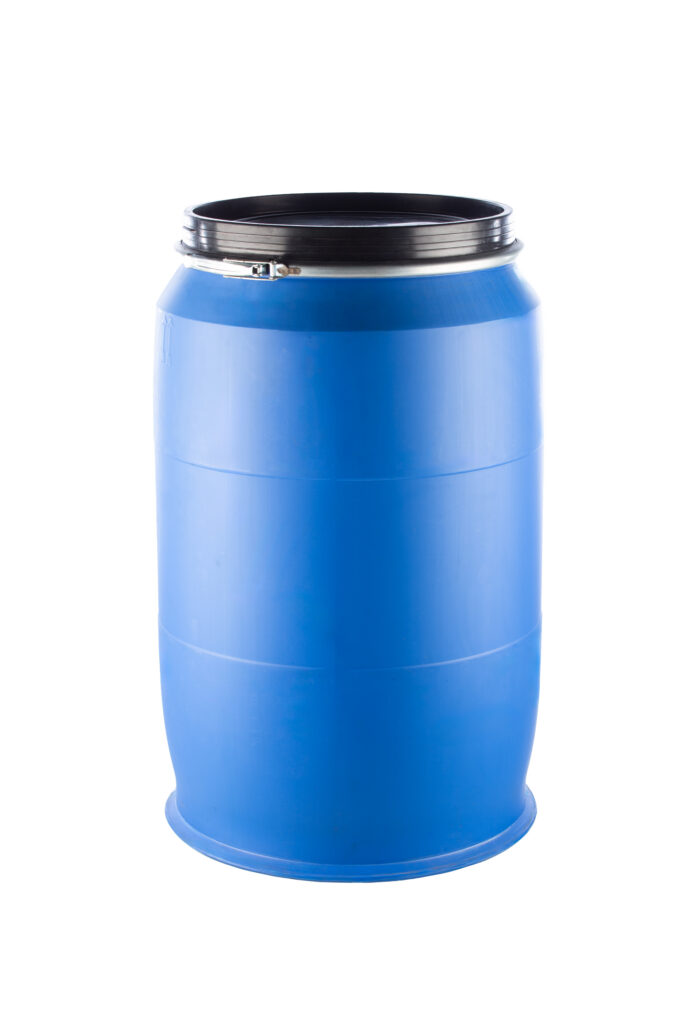
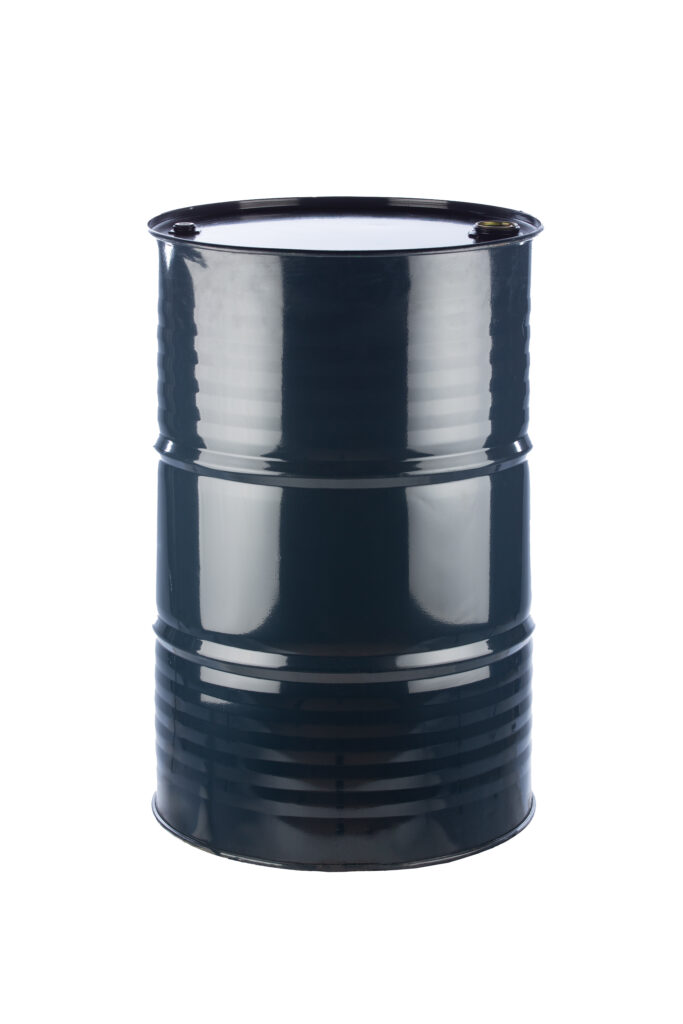
1. The material family is the first difference
Plastic / HDPE Drums
Ranama’s current plastic drum range consists of High Density Polyethylene — HDPE — drum configurations.
The public range includes both Open Top and Tight Head products.
Steel / Metal Drums
Ranama’s steel drum category covers individual product records documented as Metal Drums.
The current range also includes Open Top and Tight Head configurations.
“Steel / Metal” is used naturally at category level.
The individual steel-range product names retain the authoritative “Metal Drum” wording.
2. The current capacity ranges are different
Capacity provides one immediate distinction between the two current product families.
Plastic / HDPE Range
Ranama’s listed HDPE drum range includes six configurations across:
- 30L
- 60L
- 120L
- 160L
- 220L
There are five Open Top configurations:
- 30L Open Top
- 60L Open Top
- 120L Open Top
- 160L Open Top
- 220L Open Top
and one:
- 220L Tight Head
Steel / Metal Range
The current Steel / Metal drum range contains four listed products.
All four are documented at:
210L
The differences within that family therefore come primarily from configuration, closure arrangement and interior specification rather than capacity.
Do not compare drum families by capacity alone.
A nominal capacity tells you only one part of the product specification.
3. Both ranges include Open Top and Tight Head configurations
The terms Open Top and Tight Head appear across both drum families.
That makes configuration another useful early selection factor.
Open Top
Open Top configurations are available within both Ranama’s Plastic / HDPE and Steel / Metal ranges.
The exact lid, ring and other closure details depend on the individual product.
Tight Head
Tight Head configurations are also represented within both ranges.
The exact bung and closure specifications differ by product and should be checked against the relevant product listing.
Knowing the configuration you require can therefore narrow the range before you begin comparing individual specifications.
4. Closure information differs between individual drums
A drum should not be selected from material and capacity alone.
Closure information can provide an important technical distinction.
Plastic / HDPE Closure Examples
The published HDPE range contains different closure information depending on the product.
Several Open Top products list components such as:
- Lid
- Gasket
- Tamper-evident steel closing ring
The current 220L Tight Head HDPE drum is documented with:
S56×4 threaded bung closure
Not every HDPE product has the same published closure fields, so missing details should not be inferred.
Steel / Metal Closure Information
The four current steel / metal products have their own documented arrangements.
The two Tight Head products list:
- 2-inch BSP bung
- 3/4-inch BSP bung
The two Open Top products are documented with:
- Lid
- Latch ring
- 2-inch BSP bung in the lid
- 3/4-inch BSP bung in the lid
These are product specifications.
They should not be converted into unsupported claims about leak performance, airtightness, pressure capability or compatibility.
5. The Steel / Metal range introduces interior specification as another selection factor
One of the clearest distinctions within Ranama’s current Steel / Metal drum range is the documented interior configuration.
The four listed 210L products include:
- Tight Head — Plain Interior
- Tight Head — Internally Epoxy Lined
- Open Top — Plain Interior
- Open Top — Internally Lacquer Lined
The exact terminology matters.
The Tight Head product named:
Reconditioned Tight Head Metal Drum 210L (Epoxy Coated Interior)
has a specification stating:
Internally Epoxy Lined
The Open Top product named:
Reconditioned Open Top Metal Drum 210L (Coated Interior)
is documented as:
Internally Lacquer Lined
Epoxy lined and lacquer lined are different published specifications.
Do not treat them as interchangeable.
Does an interior lining tell you what the drum can contain?
Not automatically.
An interior treatment is part of the product specification.
It does not by itself establish compatibility with a particular chemical, material, process or application.
For example, the presence of an epoxy-lined or lacquer-lined interior should not automatically become a claim such as:
- Chemical resistant
- Solvent resistant
- Corrosion resistant
- Suitable for hazardous materials
If compatibility matters, the actual intended requirement needs to be considered separately.
6. Dimensions differ between products and configurations
Physical dimensions can matter even when nominal capacities appear close.
Within the Steel / Metal range, the current Tight Head and Open Top configurations have different documented approximate dimensions.
The Tight Head products list approximate:
- External dimensions — 584 × 876 mm
- Internal dimensions — 572 × 851 mm
The Open Top products list approximate:
- External dimensions — 609 × 880 mm
- Internal dimensions — 571 × 838 mm
The word “approximate” matters and should remain attached to those steel-drum measurements.
The HDPE range has its own product-specific dimensional information, which varies by capacity and configuration.
Rather than assuming that similar-capacity drums have similar dimensions, check the actual product listing.
7. Published weight information also differs
The current Steel / Metal product records list:
- Tight Head 210L products — 17 kg
- Open Top 210L products — 20 kg
The HDPE range does not use one universal published weight across all six products.
Some HDPE products have weight or tare-weight information, while others do not.
That illustrates an important product-selection rule:
Do not invent or carry a technical field from one drum into another just to make a comparison table complete.
8. Do not interpret HDPE material wording as automatic food suitability
Several current HDPE product records include the statement:
Manufactured from food grade material
That wording describes the recorded material from which those products were manufactured.
It does not by itself establish that a reconditioned drum is:
- Food-safe
- Approved for food contact
- Suitable for food
- Approved for a particular food application
Material information and application suitability are different questions.
The same principle applies more broadly when comparing HDPE and Steel / Metal drums:
A material name does not automatically establish suitability for your intended contents or process.
Is plastic / HDPE better for chemicals?
That should not be assumed.
The material name alone does not establish chemical compatibility.
Different contents, processes and operating requirements can introduce different technical considerations.
A generic statement such as “HDPE is best for chemicals” would therefore go beyond the current Ranama product evidence.
Is steel better for solvents or industrial use?
That should not be assumed either.
Being made from steel does not automatically establish compatibility with solvents, hazardous materials or any other defined contents.
The current Steel / Metal drum pages publish construction, closure, dimensions, weight and interior-treatment information.
Those specifications should be considered against the actual requirement rather than converted into a universal application recommendation.
Is one drum material more durable than the other?
The current Ranama product information does not establish a universal durability ranking between Plastic / HDPE and Steel / Metal drums.
Durability can also become an imprecise term unless the particular performance condition is defined.
For product selection, it is more reliable to compare the specifications that are actually published and raise any additional performance requirement during the enquiry.
A practical Plastic / HDPE vs Steel / Metal comparison
| Comparison Item | Plastic / HDPE | Steel / Metal |
|---|---|---|
| Material Family | High Density Polyethylene — HDPE | Steel / Metal drum category |
| Current Listed Capacities | 30L, 60L, 120L, 160L and 220L | 210L |
| Current Number of Listed Configurations | 6 | 4 |
| Open Top Available | Yes | Yes |
| Tight Head Available | Yes | Yes |
| Published Interior Variations | Do not infer a universal interior-treatment specification from the current range. | Plain, internally epoxy-lined and internally lacquer-lined specifications across the relevant products. |
| Closure Information | Varies by product. | Product-specific bung, lid and latch-ring information is published. |
| Detailed Technical Information | Available on the Reconditioned Plastic Drums page. | Available on the Reconditioned Steel Drums page. |
What should you compare before choosing between them?
Start with the specifications already known for your requirement.
[CHECKLIST]
Material family
Is Plastic / HDPE, Steel / Metal or another drum construction already specified?
Capacity
What nominal capacity is required?
Configuration
Do you require Open Top or Tight Head?
Dimensions
Are there dimensional restrictions within your storage, handling or operating setup?
Closure
Is a particular lid, ring or bung arrangement required?
Interior requirement
For Steel / Metal drums, is a particular published interior configuration relevant?
Quantity
How many drums are required?
Location
Where is the requirement located?
Suitability or compatibility requirement
Are there contents, processes, operating conditions or regulatory requirements that need to be considered separately?
What if neither Plastic / HDPE nor Steel is the right starting point?
The Ranama drum range also includes a:
Reconditioned Tight Head Poly-Composite 210L Drum
That product has its own construction and closure specification and is handled through the broader Reconditioned Drums pathway.
It should not be forced into either the Plastic / HDPE or Steel / Metal category simply to make the comparison binary.
The useful question is not “plastic or steel?”
A better question is:
Which drum specification matches the requirement I actually have?
Material is one part of that decision.
Capacity, configuration, closure, dimensions, interior specification and application-specific requirements may also matter.
Start with the information you know, review the relevant product range and avoid assuming that a material label automatically answers the suitability question.
Compare Ranama’s Current Drum Ranges
Ranama’s current public drum range includes Plastic / HDPE, Steel / Metal and Poly-Composite configurations.
For detailed product information, continue to the relevant drum family.